


Food Intolerance Test (IgG) Profile by Thyrocare
The Thyrocare Food Intolerance Test is a comprehensive IgG-based food sensitivity profile covering 218 food items. It measures food-specific IgG reactivity from a blood sample and provides a detailed food-wise and category-wise report for structured dietary planning, elimination, and re-challenge under professional guidance.
NABL-accredited lab • FoodPrint® certified test • 218 food items • Blood/serum sample • Offer price ₹6,999 • Free home collection • Free Patient Guidebook
Book Now, Pay during the Sample Collection
Food Intolerance Test: Key Specifications
| Specifications | Details |
|---|---|
| Profile name | Food Intolerance Test Panel IgG |
| Other names | IgG-based Food Sensitivity Test, Food IgG Antibody Test, Food Intolerance Test |
| Offer price | ₹6,999 (discounted from MRP ₹14,000) |
| Number of Items Tested | 218 |
| Sample type | Blood |
| Fasting | Not required |
| Any other preparation | Not required |
| Service type | Free home collection |
| Reporting window | 72 hours after sample collection |
| Testing lab | Thyrocare |
| Lab credentials | NABL-accredited and ISO-certified |
| Test quality | FoodPrint® certified in association with Cambridge Nutritional Sciences, UK |
| Report accompaniment | FoodPrint® Patient Guidebook with report interpretation, diet planning, symptom monitoring, food substitution, and re-introduction guidance |
| Service coverage | Available in 5,000+ PIN code areas (200+ cities) in India |
Food Intolerance Test Package: Included Food Items
The food sensitivity test panel groups 218 food items into nine categories: dairy and eggs, fish and seafood, fruits, meat, cereals and grains, nuts and seeds, vegetables and pulses, spices and herbs, and miscellaneous items.
The complete category-wise list is provided below for quick reference.

| Group | Count | Primary Components |
|---|---|---|
| Dairy & Eggs | 10 | Cow/buffalo/goat milk, casein, egg white/yolk |
| Fish & Seafood | 38 | Salmon, tuna, cod, crab, squid |
| Fruits | 38 | Apple, banana, mango, strawberry |
| Meat | 16 | Chicken, lamb, pork, beef |
| Cereals/Grains | 18 | Wheat, barley, rice, oats |
| Nuts & Seeds | 11 | Almond, cashew, peanut, walnut |
| Vegetables & Pulses | 39 | Tomato, spinach, cabbage, lentil |
| Spices & Herbs | 31 | Ginger, garlic, cinnamon, turmeric |
| Miscellaneous | 17 | Yeast, coffee, cocoa, tea |
DAIRY & EGGS (10)
- Egg White
- Casein
- Sheep Milk
- Goat Milk
- Egg Yolk
- Buffalo Milk
- Alpha-Lactalbumin
- Cow Milk
- Beta-Lactoglobulin
- Cheese
FISH & SEAFOOD (38)
- Acorn Barnacle
- African Catfish
- Albacore Tuna
- Anchovy
- Carp
- Catfish
- Chub Mackerel
- Codfish
- Common Eel
- Crab
- Crayfish
- Dab
- Dolphin Fish
- Giant Shrimp
- Haddock
- Halibut
- Herring
- Humboldt Squid
- King Crab
- Lobster
- Mackerel
- Mussel
- Octopus
- Oyster
- Pacific Cod
- Pacific Salmon
- Pangasius
- Pike
- Prawn
- Rainbow Trout
- Red Caviar
- Sardine
- Scampi
- Shrimp
- Skipjack Tuna
- Snail
- Squid
- Trout
FRUITS (38)
- Apple
- Apricot
- Avocado
- Banana
- Black Grape
- Blackberry
- Blueberry
- Cherry
- Cranberry
- Date
- Fig
- Grapefruit
- Green Grape
- Guava
- Kiwi
- Lemon
- Lime
- Lychee
- Mandarin
- Mango
- Melon
- Mulberry
- Nectarine
- Olive
- Orange
- Papaya
- Passion Fruit
- Peach
- Pear
- Pineapple
- Plum
- Pomegranate
- Prune
- Raisin
- Raspberry
- Strawberry
- Watermelon
- Yellow Melon
MEAT (16)
- Beef
- Goat
- Chicken
- Duck
- Horse
- Lamb
- Ostrich
- Ox
- Partridge
- Pork
- Quail
- Rabbit
- Turkey
- Veal
- Venison
- Wild Boar
CEREALS (18)
- Buckwheat
- Couscous
- Durum Wheat
- Flax Seed
- Millet
- Oat
- Polenta
- Quinoa
- Rice
- Rye Flour
- Spelt
- Transglutaminase
- Wheat Bran
- Barley
- Corn (Maize)
- Gliadin
- Malt
- Wheat
NUTS & SEEDS (11)
- Almond
- Cashew Nut
- Brazil Nut
- Coconut
- Hazelnut
- Macadamia Nut
- Peanut
- Pine Nut
- Pistachio
- Tiger Nut
- Walnut
VEGETABLES & PULSES (39)
- Artichoke
- Asparagus
- Aubergine
- Beet
- Black Bean
- Broccoli
- Cabbage
- Carrot
- Cauliflower
- Celeriac
- Celery
- Chickpea
- Chicory
- Chili Pepper
- Cucumber
- Fennel
- French Bean
- Garden Pea
- Green Bean
- Green Lentil
- Kidney Bean
- Leek
- Lettuce
- Lima Bean
- Onion
- Pea
- Potato
- Pumpkin
- Red Lentil
- Spinach
- Sweet Potato
- Tomato
- White Bean
- White Lentil
- Zucchini
- Lentil
- Peanut (Legume)
- Soybean
- Pea Protein
SPICES & HERBS (31)
- Allspice
- Anise
- Basil
- Bay Leaf
- Black Pepper
- Caraway
- Cardamom
- Cayenne Pepper
- Celery Seed
- Chili
- Cinnamon
- Clove
- Coriander
- Cumin
- Curry
- Dill
- Fennel Seed
- Garlic
- Ginger
- Horseradish
- Marjoram
- Mint
- Mustard
- Nutmeg
- Oregano
- Paprika
- Parsley
- Rosemary
- Sage
- Thyme
- Turmeric
MISCELLANEOUS (17)
- Brewer’s Yeast
- Chocolate
- Cocoa
- Coffee
- Green Tea
- Honey
- Mushroom
- Sunflower Seed
- Tea
- Yeast
- Gelatin
- Sesame
- Vanilla
- Vinegar
- Whey
- Glucose
- Soy Lecithin
Food Intolerance Test Report
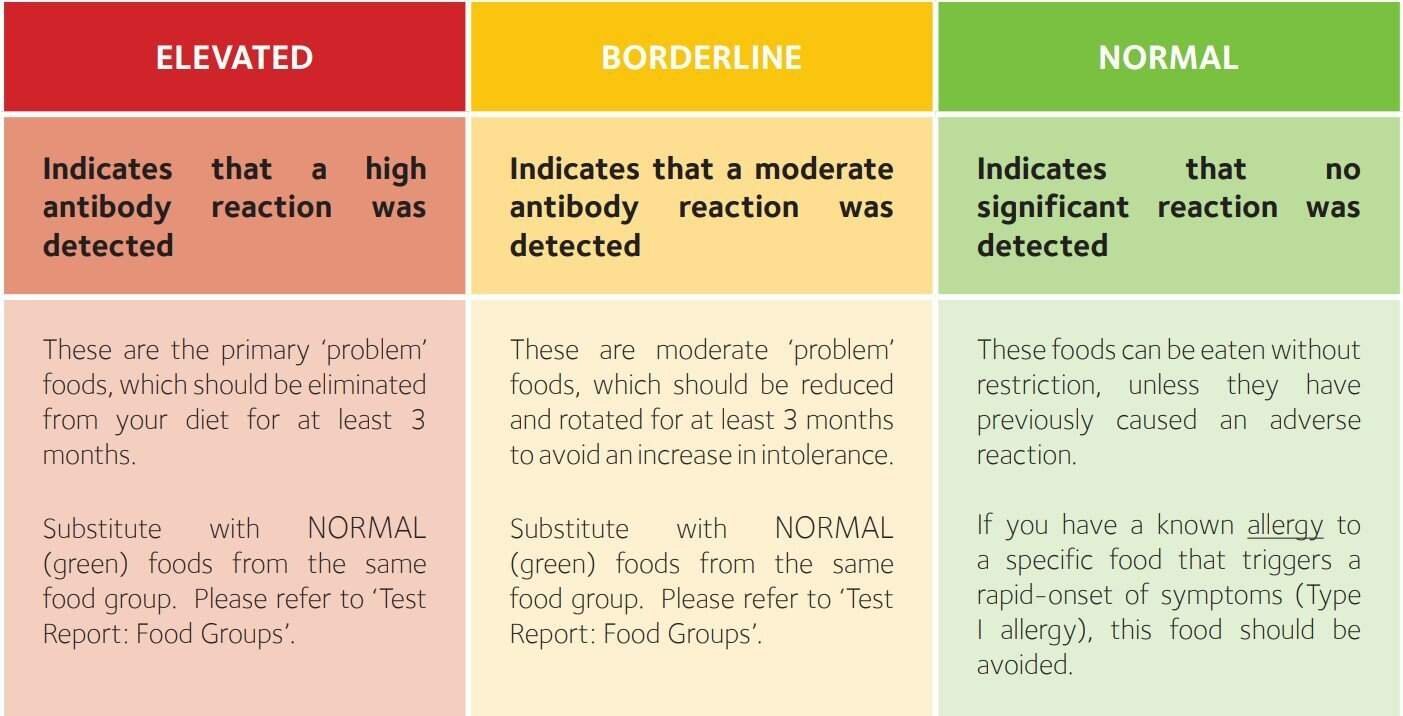
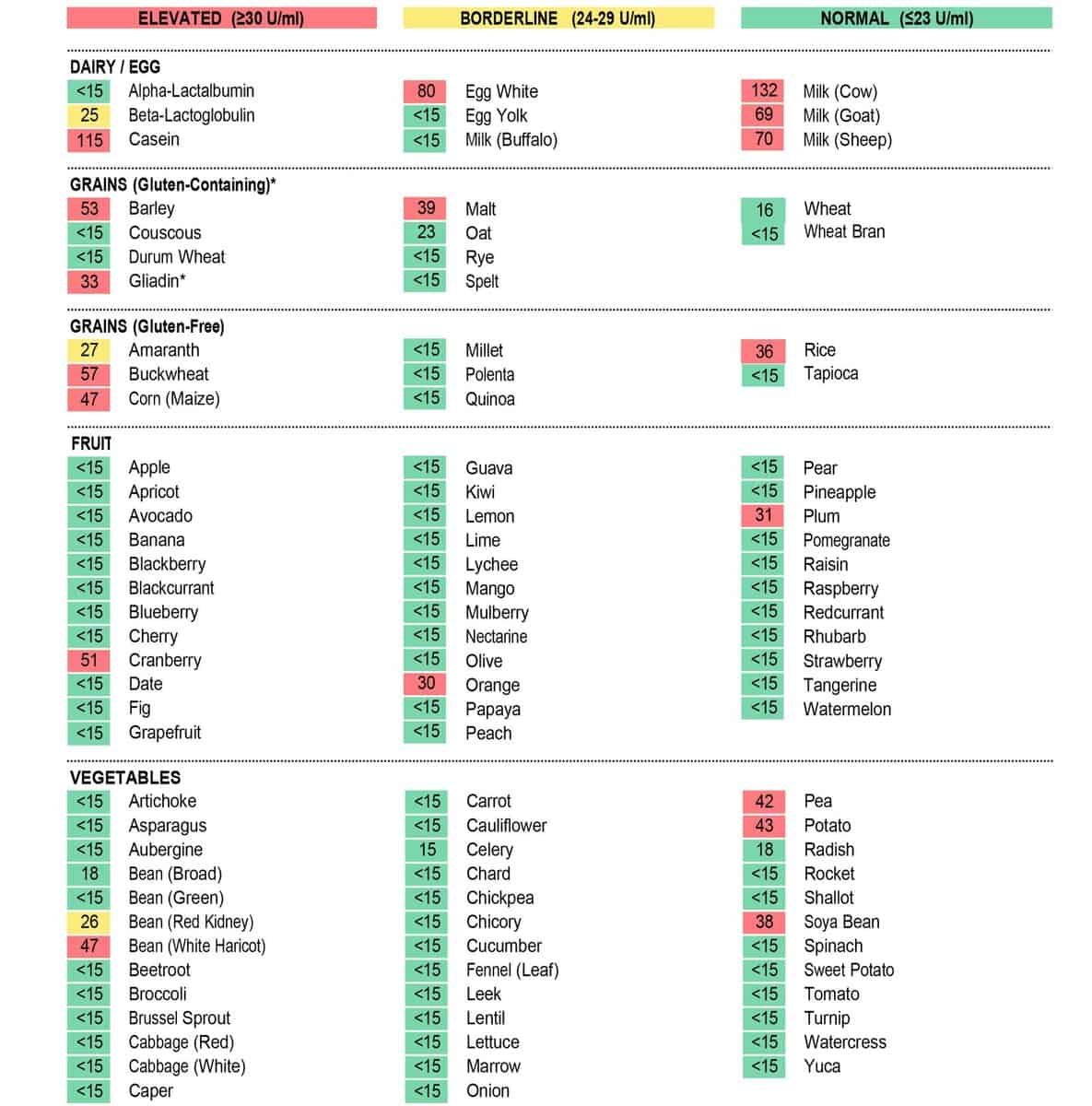
The Food Intolerance Test report by Thyrocare presents each food with a numerical IgG antibody concentration in U/mL. Results are colour-coded as elevated, borderline, or normal, and the same findings are presented in two formats: by food group and by order of reactivity.
Sample report: View sample PDF report of the Food Intolerance Test
| Report band | IgG concentration | How it appears |
|---|---|---|
| Elevated | ≥30 U/mL | 🔴 Red |
| Borderline | 24–29 U/mL | 🟡 Yellow |
| Normal | ≤23 U/mL | 🟢 Green |
How to Book the Food Intolerance Test
- Connect with us
Message on WhatsApp or call +91 70701 77147. - Share information
Name, age, gender, complete address with area PIN code, preferred sample collection date and time. - Booking confirmation
We will confirm your order and share the order ID within a few minutes. - Sample collection
A trained phlebotomist will collect a blood sample at your address. - Lab processing
The sample will be processed at an NABL-accredited Thyrocare lab. - Receive report
The digital report will be delivered within 72 hours after sample collection.
Food Intolerance Test Prices in Major Indian Cities
Free home sample collection for the Food Intolerance Test is available across 5,000+ PIN code areas in India. City-wise offer prices range from ₹6,970 to ₹6,999. Below are the prices of the Food Intolerance Test profile (Food Sensitivity Test) in major Indian cities.
| City | City-wise Offer Price |
|---|---|
| Mumbai | ₹6,995 |
| Delhi | ₹6,997 |
| Bangalore | ₹6,998 |
| Hyderabad | ₹6,979 |
| Ahmedabad | ₹6,980 |
| Chennai | ₹6,975 |
| Kolkata | ₹6,978 |
| Surat | ₹6,987 |
| Pune | ₹6,970 |
| Jaipur | ₹6,975 |
| Lucknow | ₹6,972 |
| Kanpur | ₹6,982 |
| Nagpur | ₹6,987 |
| Indore | ₹6,988 |
| Thane | ₹6,986 |
| Bhopal | ₹6,976 |
| Visakhapatnam | ₹6,993 |
| Patna | ₹6,996 |
| Vadodara | ₹6,994 |
| Ghaziabad | ₹6,997 |
| Ludhiana | ₹6,991 |
| Agra | ₹6,989 |
| Nashik | ₹6,978 |
| Faridabad | ₹6,997 |
| Meerut | ₹6,994 |
| Raipur | ₹6,981 |
| Panaji | ₹6,992 |
| Bhubaneswar | ₹6,984 |
| Guwahati | ₹6,998 |
| Ranchi | ₹6,977 |
| Bhagalpur | ₹6,971 |
| Noida | ₹6,997 |
| Varanasi | ₹6,973 |
| Amritsar | ₹6,983 |
| Mohali | ₹6,996 |
| Ambala | ₹6,974 |
| Roorkee | ₹6,985 |
| Mandi | ₹6,973 |
| Coimbatore | ₹6,972 |
| Kochi | ₹6,986 |
| Vijayawada | ₹6,980 |
| Tirupati | ₹6,990 |
| Davanagere | ₹6,989 |
| Gurugram | ₹6,997 |
| Chandigarh | ₹6,999 |
| Rajkot | ₹6,985 |
| Jabalpur | ₹6,976 |
| Jamshedpur | ₹6,982 |
| Mysuru | ₹6,988 |
| Srinagar | ₹6,997 |
In other cities, the standard offer price of the Thyrocare Food Intolerance Test is ₹6,999.
What Is Food Intolerance?
Food intolerance and food sensitivity are broad terms used for adverse reactions to particular foods. Food-related reactions can be immune-mediated or non-immune-mediated.
This profile measures food-specific IgG antibody reactivity. Other forms of food intolerance include lactose intolerance caused by lactase deficiency and histamine intolerance associated with impaired histamine breakdown.
Who Needs a Food Intolerance Test?
A Food Intolerance Test is useful for people who experience recurring food-related symptoms but find it difficult to identify the triggering foods. These can include bloating, digestive discomfort, headaches, fatigue, skin concerns, or symptoms that appear several hours after eating. The test is also useful when planning a structured elimination and re-introduction diet with a medical professional or nutritionist.
Food Intolerance vs Food Allergy
This Food Intolerance Test uses IgG-based food reactivity screening. Food allergy testing is different and involves IgE testing together with clinical evaluation. In a food allergy, the immune system reacts to a food protein and can trigger rapid symptoms, including severe reactions.
| Topic | Food Intolerance / Sensitivity Profile | Food Allergy Testing |
|---|---|---|
| Antibody measured | Food-specific IgG | Food-specific IgE |
| Common reaction pattern | Delayed or recurring food-related symptoms | Rapid-onset allergic symptoms |
| Examples discussed | Digestive discomfort, bloating, headaches, fatigue, and recurring diet-related concerns | Rashes, swelling, breathing difficulty, and anaphylactic reactions |
| Report use | Structured dietary review, rotation, elimination, symptom monitoring, and re-introduction | Allergen-specific allergy assessment and avoidance planning |
Milk-protein reactivity and lactose intolerance are different: An elevated IgG reaction to cow’s milk concerns milk proteins, while lactose intolerance results from insufficient lactase enzyme activity.
Using the Food Intolerance Report for Diet Planning
- Review the strongest reactions: Start with foods listed as elevated and use the Order of Reactivity view to identify the highest numerical values.
- Choose alternatives: Use normal foods from the same food group while maintaining variety across meals.
- Rotate foods: Avoid replacing one frequently eaten food with another food consumed every day.
- Keep a food and symptom diary: Record foods, symptoms, and changes before and during the dietary plan.
- Re-introduce foods gradually: After at least three months and once symptoms have improved, introduce one food at a time and observe the response for five days before introducing the next food.
- Maintain nutritional balance: Replace nutrients supplied by any major food group removed from the diet.
Is This a Blood Test or a Stool Test?
This Food Intolerance Profile is a blood test processed in a certified laboratory. A blood sample is collected, serum is prepared, and the report is issued after lab analysis.
It is not a home stool test kit.
Written by: Hema Mehta Sahoo
Medically Reviewed by: Dr. M. A. Khan, MD Pathology
Last updated: July 13, 2026
Note: Food-specific IgG results are best interpreted together with symptoms, dietary history, and professional guidance. Any elimination and re-introduction plan should preserve a varied and nutritionally balanced diet.
FAQs on Food Intolerance Test
Does an elevated cow’s milk result mean lactose intolerance?
No. The Food Intolerance Test profile measures IgG reactivity to milk proteins. Lactose intolerance results from insufficient lactase, the enzyme required to digest lactose.
Is wheat-free the same as gluten-free?
No. Wheat is one source of gluten, while gluten is also present in barley and rye. A wheat-free product can therefore still contain gluten from another grain. Ingredient labels should always be checked carefully.
Why is gliadin reported separately from wheat, barley, and rye?
Gliadin is the storage-protein fraction associated with gluten-containing grains. The test reports gliadin separately because it is extracted differently from the other grain proteins.
How are foods re-introduced after an elimination period?
FoodPrint® recommends gradual re-introduction after at least three months and once symptoms have improved. Introduce one food at a time and monitor the response for five days before adding another food.
References (for general reading)
- NHS: Food Intolerance
- AAAAI: Food Allergy Overview
- Mayo Clinic: Food Allergy Symptoms & Causes
- PMC Article: Food intolerance
These are general resources; they are not a substitute for clinician guidance or individualized medical advice.