
ImmunoCAP Blood Test Panel for Asthma and Rhinitis Allergy by Thyrocare
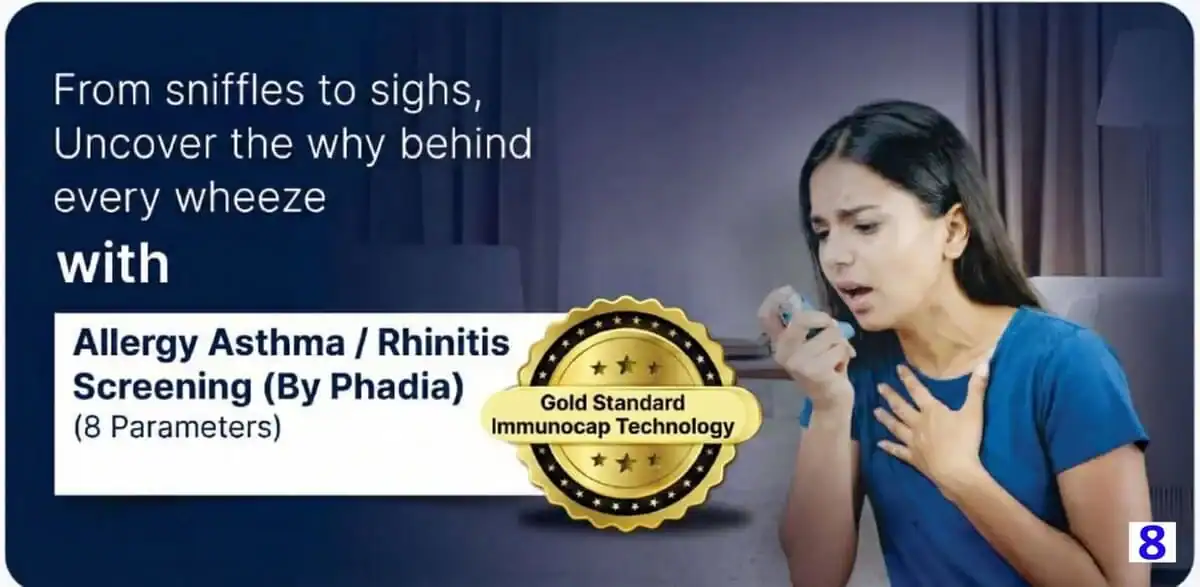
This comprehensive blood test panel checks 8 inhalant allergens commonly linked with asthma and rhinitis allergy symptoms such as sneezing, nasal blockage, cough, breathing discomfort, and itchy or watery eyes. This panel uses ImmunoCAP technology (often considered a gold-standard method for specific IgE testing).
Offer Price: ₹5,805 · 25% off on MRP: ₹7,740 · High-precision ImmunoCAP Allergy Test · NABL-accredited Lab
Quick Info: Asthma and Rhinitis Allergy Test
| Specifications | Details |
|---|---|
| Test Name | Comprehensive Asthma and Rhinitis Allergy Panel Test |
| Other Names of the Test | ImmunoCAP Asthma/Rhinitis Allergy Test, Comprehensive Allergy/Rhinitis Panel Test by Phadia, ImmunoCAP Asthma Allergy Panel |
| Offer Price | ₹5,805 |
| Reporting TAT | Around 48 hours from the time of sample collection |
| Sample Type | Blood (Serum) |
| Number of Allergens Tested | 8 |
| Allergen Categories Included | 4 (dust, dust mite, insect, and mold) |
| Suitable Age Group | All |
| Fasting | Not Required |
| Test Type | ImmunoCAP allergen-specific immunoglobulin E (IgE) antibody test |
| Testing Lab | Thyrocare |
| Lab Credentials | CAP and NABL-accredited, ISO-certified |
| Service Area | 250+ cities and towns (5,000+ PIN code areas) across India |
| Service Type | Free home sample collection |
Asthma and Rhinitis Allergy Test: Symptoms, Allergens Included, Booking Steps, and Sample Report
Symptoms commonly linked with inhalant allergies
- Sneezing
- Runny or blocked nose
- Coughing
- Breathing difficulty or wheeze-like discomfort
- Itchy, watery eyes
If symptoms are severe, persistent, or associated with chest tightness, consult a doctor promptly; this panel supports screening but does not replace medical evaluation.
Allergens covered (8 parameters)
| Category | Allergen | Why it matters |
|---|---|---|
| Dust | House Dust | Common indoor trigger for rhinitis-like symptoms. |
| Dust mite | Dermatophagoides pteronyssinus | Frequent indoor allergen linked with nasal and breathing symptoms. |
| Dust mite | Dermatophagoides farinae | Another common mite species relevant for indoor exposure. |
| Insect | Cockroach, German | Indoor allergen that can worsen allergic sensitization. |
| Mold | Penicillium chrysogenum | Indoor/outdoor mold exposure may aggravate rhinitis symptoms. |
| Mold | Cladosporium herbarum | Outdoor mold exposure, often seasonal depending on geography. |
| Mold | Aspergillus fumigatus | Relevant in damp environments; can be clinically important in select cases. |
| Mold | Alternaria alternata | Common outdoor mold; may correlate with seasonal symptoms. |
Booking and testing process
- Step 1: Share the beneficiary’s name, age, gender, contact details, complete address with area PIN code, and preferred date and time for home sample collection.
- Step 2: Our support team will confirm the order with an order ID.
- Step 3: A trained phlebotomist will collect the blood sample from the confirmed address at the chosen time.
- Step 4: Pay online by UPI, debit card, credit card, or net banking at the time of sample collection.
- Step 5: The sample will be processed at Thyrocare’s central processing laboratory using the Phadia 250 system and fluorescence enzyme immunoassay (FEIA) technology.
- Step 6: The digital report will be sent by WhatsApp and email in around 48 hours. A printed report can also be delivered by courier for an additional ₹75.
Sample report PDF
Why this asthma and rhinitis allergy panel is ordered
This blood test checks for specific IgE sensitization to common inhalant allergens in persons with allergy symptoms associated with recurring nasal or breathing issues.
- To identify sensitization to house dust, dust mites, German cockroach, and selected molds
- To assess repeated sneezing, blocked nose, watery eyes, coughing, wheezing, or breathing discomfort
- To help a doctor decide whether additional allergy testing or allergen-avoidance guidance is required
- To begin with an inhalant-specific panel when the symptoms point mainly to indoor or airborne allergens
Related allergy tests and panels
FAQs on Comprehensive Asthma & Rhinitis Allergy Panel Test
Why does this panel include only 8 allergens instead of a bigger allergy list?
This panel is curated for only asthma and rhinitis allergy tests, not for full profile allergy testing. It checks common inhalant triggers such as house dust, dust mites, German cockroach, and selected molds that are relevant when symptoms center on sneezing, blocked or runny nose, cough, or breathing discomfort. A full allergy panel is not always the best first step when the clinical suspicion is already around indoor or airborne allergens.
How is this panel different from a larger allergy blood panel?
The difference is its method and allergen selection. This is an ImmunoCAP-based specific IgE blood test covering eight asthma- and rhinitis-related inhalant allergens. It does not include the larger combinations of food and environmental allergens found in comprehensive allergy panels. When symptoms are mainly nasal or breathing-related, this smaller inhalant panel can provide more directly relevant results.
Why are dust mites, cockroaches, and molds grouped in this test?
They are grouped because they are common indoor inhalant triggers that often overlap in real-life exposure. People with recurring rhinitis or asthma-like allergy symptoms can be exposed to allergens in mattresses, bedding, old furnishings, damp corners, and poorly ventilated rooms rather than through one isolated source. This panel brings those commonly suspected indoor allergens together in one blood test instead of separating them across multiple smaller tests.
Should I stop antihistamines or allergy medicines before testing?
How soon will I receive the report?
Written by:
Hema Mehta Sahoo
Medically reviewed by:
Dr. M A Khan, MBBS, MD Pathology
Last updated: October 3, 2026