
Hb HPLC Test: Hemoglobin Variant Analysis
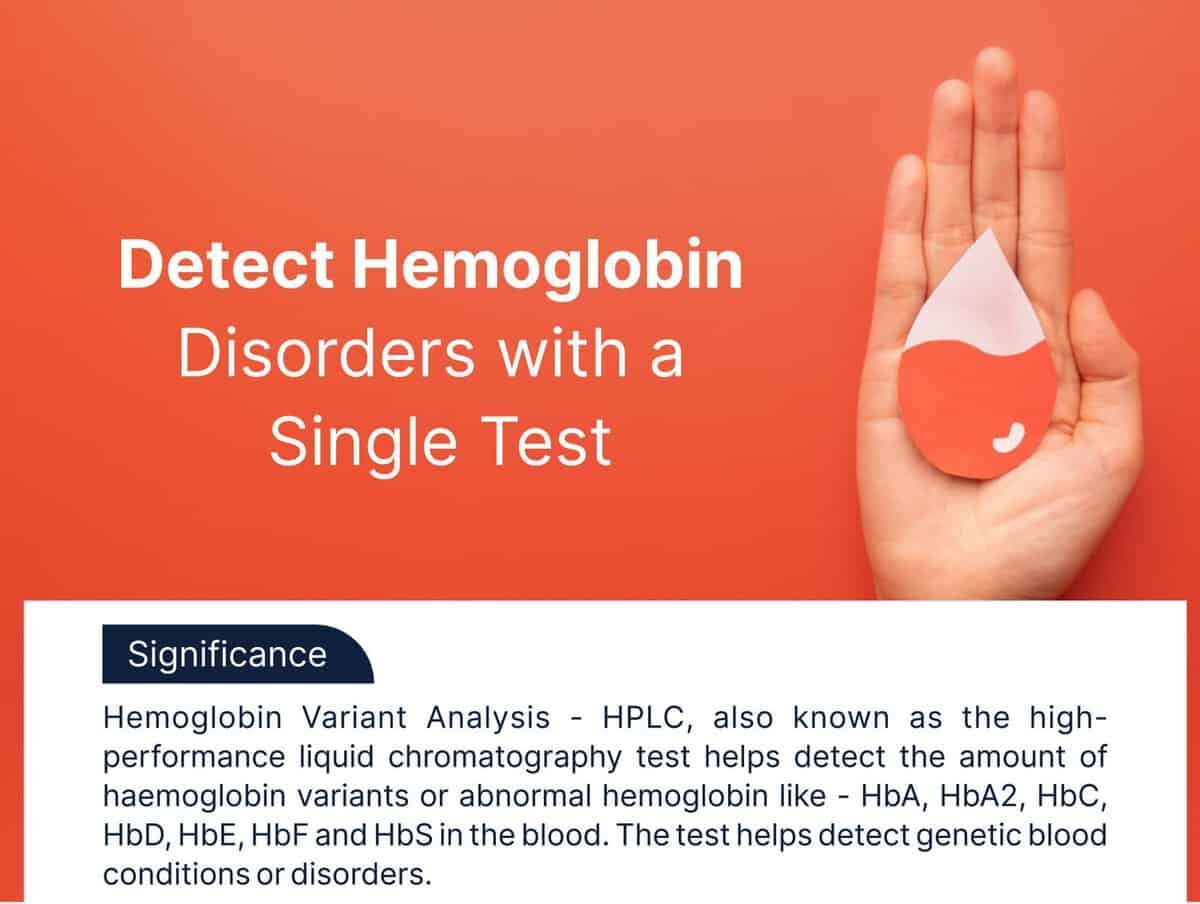
The HPLC blood test (High-Performance Liquid Chromatography) separates and measures hemoglobin variants (Hb A2, Hb C, Hb D, Hb F, and Hb S) for screening and evaluation of thalassemia traits, sickle cells, and hemoglobinopathies. Book the test by Thyrocare at ₹572 with free home sample collection.
Book Now, Pay During Sample Collection.
Hb HPLC Test Price and Information
| Test Name | Hb HPLC Test |
|---|---|
| Alternative Names | Hemoglobin Variant Analysis, Beta Thalassemia Screening, Thalassemia Carrier Screening, Hemoglobin A2 Test, hemoglobin Variant analysis, Sickle Cell Trait screening, Thalassemia Blood Test |
| Parameters | Hb A2, Hb C, Hb D, Hb F, and Hb S |
| Offer Price | ₹572 |
| Discount Applied | 62% off on MRP |
| Testing Lab | Thyrocare |
| Lab Credentials | NABL-accredited and ISO-certified |
| Sample Type | Blood |
| Fasting | Not required |
| Service Type | Free home collection |
| Report in | 18 to 36 hours from the sample collection time |
| Sample Report | View Hb HPLC sample report |
About the Hb HPLC Test
What the Hb HPLC test measures
- Normal hemoglobin fractions such as Hb A2 and Hb F.
- Abnormal hemoglobin variants Hb C, Hb D, and Hb S.
- Chromatogram peaks and retention patterns used by pathologists for interpretation.
When is an Hb HPLC test prescribed?
- For the clinical workup of suspected hemoglobin variants or unexplained anemia.
- To differentiate between severe iron deficiency and thalassemia traits.
- As part of carrier screening and prenatal planning (premarital or early pregnancy).
- Routine screening for family members of individuals with sickle cell disease or thalassemia major.
How to prepare for an Hb HPLC test
- Fasting is not required for an Hb HPLC test.
- Have your previous CBC (Complete Hemogram) or Iron Profile reports available for your doctor to correlate with the HPLC results.
Hb HPLC for Thalassemia and Sickle Cell Screening
Hb HPLC measures Hb A2 and Hb F and detects variants such as Hb C, Hb D, and Hb S. The test is commonly prescribed for beta thalassemia carrier screening, sickle cell screening, and unexplained microcytic anemia.
Recent blood transfusion, severe iron deficiency, and the patient’s age can affect the findings. Share these details with the doctor interpreting the report.
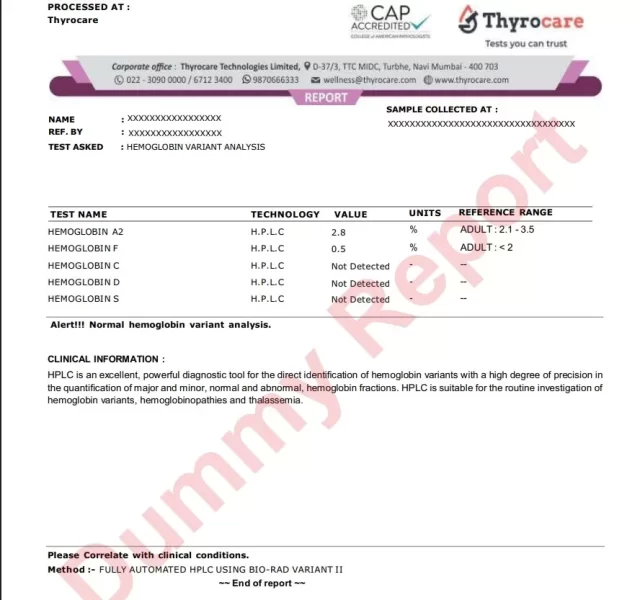
Hb HPLC Test Parameters and Sample Report
HPLC Test Report Components
- Hemoglobin A2 (Hb A2)
- Hemoglobin C (Hb C)
- Hemoglobin D (Hb D)
- Fetal Hemoglobin (Hb F)
- Hemoglobin S (Hb S)
The report also includes the chromatogram and pathology laboratory comments.
Sample Collection
A fully trained and experienced phlebotomist will collect your blood sample at your chosen address and time slot. The barcoded sample vials will be properly labeled to assure proper identification.
Sample Report Preview
Format reference for your physician.
How to Book the HPLC Test
Follow these simple steps to schedule your home sample collection.
- Tap the WhatsApp booking button below.
- Share the beneficiary’s name, age, gender, complete address, email ID, phone number, and preferred time slot.
- Our support team will confirm your booking and assign a technician.
- Pay securely only when the technician arrives for sample collection.
FAQs on the Hb HPLC Blood Test
Can an Hb HPLC test detect beta thalassemia trait?
Hb HPLC is commonly used for beta thalassemia trait or carrier screening. It measures Hb A2 and Hb F and checks for other hemoglobin variants. A raised Hb A2 level can support beta thalassemia trait, but the result should be read with the CBC, red blood cell indices, iron status, family history, and any previous blood transfusion.
Can Hb HPLC detect sickle cell trait or sickle cell disease?
Yes. The test detects and measures Hb S, the hemoglobin variant associated with sickle cell conditions. The amount of Hb S, the other hemoglobin fractions, the chromatogram, CBC findings, symptoms, and transfusion history help the doctor assess whether the result indicates sickle cell trait, sickle cell disease, or another combined hemoglobin disorder. Further testing can be advised when the pattern is unclear.
What do Hb A2, Hb F, Hb S, Hb C, and Hb D mean in an HPLC test?
The five parameters represent different hemoglobin fractions and variants:
- Hb A2: A minor adult hemoglobin fraction used in beta thalassemia carrier screening.
- Hb F: Fetal hemoglobin, which is naturally higher in infants and can also be raised in some inherited hemoglobin conditions.
- Hb S: The variant associated with sickle cell trait and sickle cell disease.
- Hb C: A structural hemoglobin variant that can occur alone or with another variant.
- Hb D: A hemoglobin variant found in several populations, including parts of India.
The individual value should not be interpreted separately from the complete report and chromatogram.
Why are CBC and iron studies advised with an Hb HPLC test?
Iron deficiency anemia and beta thalassemia trait can both produce small red blood cells and low MCV or MCH values. A CBC shows the hemoglobin level, red blood cell count, MCV, MCH, RDW, and other blood cell indices, while iron studies check whether iron deficiency is present. Reading these results with Hb HPLC helps the doctor distinguish an iron-related anemia from a possible inherited hemoglobin trait.
Can iron deficiency or a recent blood transfusion affect an Hb HPLC report?
Yes. Iron deficiency can lower Hb A2 in some patients and make a borderline beta thalassemia trait result harder to interpret. A recent blood transfusion introduces donor hemoglobin and can change the percentages shown in the report. Inform the doctor about diagnosed iron deficiency, iron treatment, recent transfusions, and any earlier Hb HPLC or electrophoresis reports.
What is the difference between Hb HPLC and hemoglobin electrophoresis?
Both tests separate hemoglobin fractions and help detect thalassemia patterns, Hb S, and other hemoglobin variants. Hb HPLC uses chromatography and provides automated quantitative measurement of fractions such as Hb A2 and Hb F. Hemoglobin electrophoresis separates hemoglobin in an electric field and provides an electrophoresis pattern or graph. Hb HPLC generally offers more precise quantification of Hb A2 and Hb F, while electrophoresis can provide useful supporting information when a variant needs further evaluation.
Why is Hb HPLC advised before marriage or during pregnancy?
A person carrying beta thalassemia trait or sickle cell trait can be healthy and remain unaware of the inherited variant. Premarital, preconception, or early-pregnancy screening helps identify carriers. When one partner is found to carry a significant hemoglobin variant, testing the other partner helps assess the possibility of an affected child. Couples in whom both partners are carriers should discuss the results with their doctor or a genetic counsellor.
Written by: Hema Mehta Sahoo
Medically reviewed by: Dr. M A Khan, MBBS, MD Pathology
Sources:
CDC (Thalassemia),
WHO (Haemoglobinopathies)
Last updated: July 15, 2026