
Food Allergy Test Panels by ImmunoCAP (Phadia) – Prices, Parameters, and Home Sample Collection
Book a food allergy blood test panel based on suspected triggers such as fruits, vegetables, nuts, cereals, seafood, meat, egg, or mixed foods. These panels are processed by CAP & CAP & NABL-accredited Thyrocare using high-sensitive ImmunoCAP technology by Phadia, a globally standardized method that supports high report accuracy in allergen-specific IgE testing, especially for foods.
ImmunoCAP Food Allergy Test Price and Accuracy Note
These food allergy blood tests use high-sensitive ImmunoCAP technology by Phadia, which is known for high report accuracy and strong analytical sensitivity in allergen-specific IgE testing. Because this is a more specialized testing methodology than many routine allergy screening methods, the test price is higher than the standard ELISA or EIA-based panels.
If you are looking for a broader and lower-cost allergy screening option, you can also check All Allergy Test Panels (ELISA) and Prices.
Allergy Food Panel 1 (By Phadia) – 10 Parameters
Suggested when everyday foods are suspected triggers; supports clinician-led evaluation of possible food allergy sensitization patterns.
Panel includes (10)
- Egg White
- Milk
- Fish (cod)
- Wheat
- Peanut
- Soybean
- Chicken
- Gluten
- Rice
- Shrimp
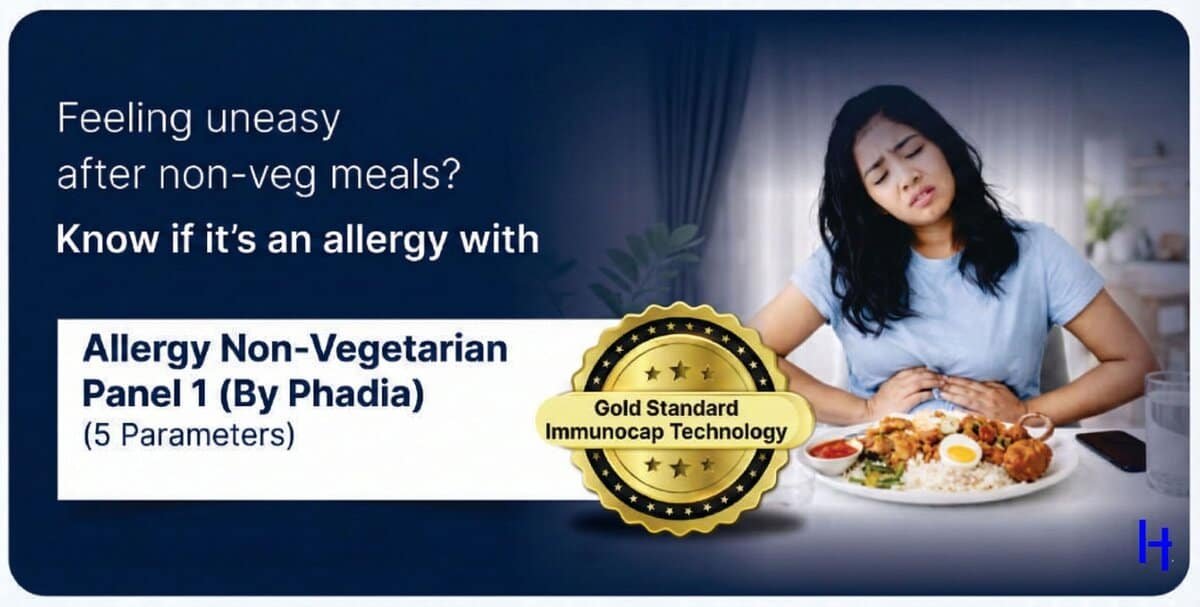
Allergy Non-Vegetarian Panel 1 (By Phadia) – 5 Parameters
Useful when reactions are suspected after egg or commonly consumed meat sources such as chicken, pork, beef, or turkey.
Panel includes (5)
- Chicken
- Pork
- Beef
- Turkey Meat
- Egg
Allergy Non-Vegetarian Panel 2 (By Phadia) – 6 Parameters
Useful when seafood or fish-related reactions are suspected after shrimp, cod, lobster, mussel, salmon, or tuna.
Panel includes (6)
- Shrimp
- Fish (cod)
- Lobster
- Blue Mussel
- Salmon
- Tuna

Allergy Nut Panel (By Phadia) – 6 Parameters
Useful when tree nuts or peanut are suspected triggers in immediate food-related reactions.
Panel includes (6)
- Peanut
- Almond
- Hazelnut
- Brazilnut
- Cashewnut
- Walnut

Allergy Cereal/Veg Food Panel (By Phadia) – 8 Parameters
Useful when wheat, rice, oat, corn, sesame, lentil, pea, or rye are suspected dietary triggers.
Panel includes (8)
- Wheat
- Rice
- Oat
- Maize (Corn)
- Sesame Seed
- Lentil
- Pea
- Cultivated Rye

Allergy Fruit Panel 1 (By Phadia) – 4 Parameters
Useful when symptoms are suspected after common fruits such as banana, peach, orange, or apple.
Panel includes (4)
- Banana
- Peach
- Orange
- Apple

Allergy Fruit Panel 2 (By Phadia) – 4 Parameters
Useful when reactions are suspected after strawberry, pear, lemon, or pineapple.
Panel includes (4)
- Strawberry
- Pear
- Lemon
- Pineapple

Allergy Vegetable Panel 1 (By Phadia) – 5 Parameters
Useful when tomato, garlic, onion, celery, or yeast are suspected food-related triggers.
Panel includes (5)
- Tomato
- Yeast
- Garlic
- Onion
- Celery

Allergy Vegetable Panel 2 (By Phadia) – 4 Parameters
Useful when tomato, spinach, cabbage, or sweet pepper are suspected triggers.
Panel includes (4)
- Tomato
- Spinach
- Cabbage
- Sweet Pepper

Allergy Vegetable Panel 3 (By Phadia) – 4 Parameters
Useful when spinach, potato, carrot, or cucumber are suspected triggers.
Panel includes (4)
- Spinach
- Potato
- Carrot
- Cucumber

Food Allergy Test Price Comparison – ImmunoCAP Panels
| Panel | Parameters | Offer Price | MRP | Included Food Allergens |
|---|---|---|---|---|
| Any single ImmunoCAP (by Phadia) Allergy Test | 1 | ₹997 | Any individual test from any allergy panel | |
| Allergy Food Panel 1 | 10 | ₹5,805 | Egg white, milk, fish (cod), wheat, peanut, soybean, chicken, gluten, rice, shrimp | |
| Non-Vegetarian Panel 1 | 5 | ₹4,230 | Chicken, pork, beef, turkey meat, egg | |
| Non-Vegetarian Panel 2 | 6 | ₹4,230 | Shrimp, fish (cod), lobster, blue mussel, salmon, tuna | |
| Nut Panel | 6 | ₹4,140 | Peanut, almond, hazelnut, brazilnut, cashewnut, walnut | |
| Cereal/Veg Food Panel | 8 | ₹5,850 | Wheat, rice, oat, maize (corn), sesame seed, lentil, pea, cultivated rye | |
| Fruit Panel 1 | 4 | ₹3,150 | Banana, peach, orange, apple | |
| Fruit Panel 2 | 4 | ₹3,150 | Strawberry, pear, lemon, pineapple | |
| Vegetable Panel 1 | 5 | ₹2,970 | Tomato, yeast, garlic, onion, celery | |
| Vegetable Panel 2 | 4 | ₹2,880 | Tomato, spinach, cabbage, sweet pepper | |
| Vegetable Panel 3 | 4 | ₹2,880 | Spinach, potato, carrot, cucumber |
How to Book and Get Your Allergy Test Report
- Panel Selection: Select the allergy panel that matches your suspected food triggers (fruit/veg/nut/cereal/non-veg/comprehensive).
- Book on WhatsApp or call to confirm address (with landmark and area PIN code), preferred date/time for home sample collection, and beneficiaries details (name, age, and gender).
- Confirmation: You will get booking confirmation within a few minutes
- Sample Collection: A trained phlebotomist will collect the sample following strict safety and hygiene guidelines
- Payment: Make secure online payment during the sample collection.
- Testing: The blood sample will be processed at Thyrocare Central Processing Lab (CPL).
- Report Delivery: You will receive the report download link when the sample arrives at the lab. You can download the complete reports when it is released.
Sample type for these panels is blood. Fasting is not required unless another booked test needs it.
Explore Related Allergy Tests and Food Intolerance Panels
Understanding Food Allergy Panels Using ImmunoCAP (Phadia)
What These Food Allergy Panels Help With
A food allergy blood test panel measures allergen-specific IgE antibodies against selected foods. These panels help clinicians evaluate possible food-related allergic sensitization when symptoms appear after specific foods.
- Targeted allergen testing: panels grouped by fruits, vegetables, nuts, cereals, seafood, meat, or mixed foods.
- Symptom correlation: supports clinical evaluation when reactions appear after particular foods.
- Diet evaluation support: results can guide further medical discussion about possible trigger foods.
Who May Consider a Food Allergy Blood Test Panel
These panels are usually considered when food-related symptoms appear repeatedly and the suspected trigger group is already known or partially identified.
- Skin reactions: itching, hives, rash, or swelling after eating certain foods.
- Respiratory symptoms: sneezing, throat irritation, cough, or breathing discomfort.
- Digestive symptoms: nausea, stomach upset, or diarrhea after specific foods.
- Suspected food triggers: reactions linked to nuts, milk, egg, seafood, wheat, fruits, or vegetables.
Food allergy and food intolerance are different conditions. If symptoms are mainly digestive or delayed, you may also review the food intolerance tests.
Content Authorship and Medical Review
Written by: Hema Mehta Sahoo, Medical Content Writer
Medically Reviewed by: Dr. M. A. Khan, MD Pathology, MBBS, Consultant Pathologist
Last updated: March 14, 2026
Laboratory testing is performed by Thyrocare, while Healthcare Offers provide discounts, and coordinates booking and sample collection services.