

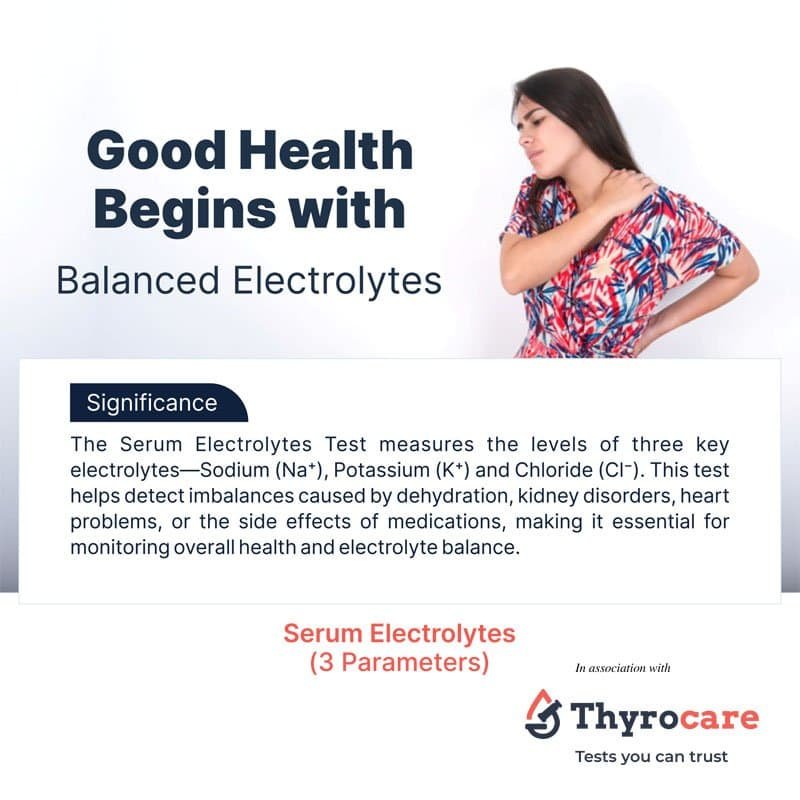
Thyrocare Serum Electrolytes Test Panel
Check hydration balance, nerve signaling, and muscle function with Thyrocare’s Serum Electrolytes Test. This 3-parameter blood test measures Sodium, Potassium, and Chloride levels in your blood. It helps evaluate electrolyte imbalance in people with muscle cramps, fatigue, weakness, irregular heartbeat, dehydration, kidney-related concerns, or ongoing use of blood pressure medicines and diuretics.
Secure WhatsApp Booking • Pay During the Sample Collection
Serum Electrolytes Test: Quick Facts
| Test Name | Thyrocare Serum Electrolytes Test Panel |
| Offer Price | ₹340 |
| Discount Applied | 43% Off on MRP |
| Parameters | 3 blood electrolyte tests |
| Sample Type | Venous Blood (Serum) |
| Fasting | Not required (sample can be collected at any convenient time of day) |
| Testing Lab | Thyrocare (NABL-accredited and ISO-certified laboratory) |
| Reporting Time | 12 to 18 hours following sample collection |
| Service Type | Convenient doorstep sample collection available across 5,000+ PIN code areas in India. |
Profile Composition: 3 Core Electrolyte Test Parameters
Rather than evaluating general organ health, the Serum Electrolyte test profile isolates and measures the three primary electrically charged minerals circulating in your blood, which are vital for maintaining cellular hydration and nerve function.
Serum Electrolytes (3 Blood Tests)
- Sodium (Na): The primary extracellular electrolyte. It is crucial for regulating the total amount of water in the body, maintaining blood pressure, and ensuring proper muscle and nerve function.
- Potassium (K): The primary intracellular electrolyte. It plays a crucial role in regulating your heartbeat, synthesizing proteins, and metabolizing carbohydrates.
- Chloride (Cl): Works closely with Sodium to maintain proper blood volume, blood pressure, and the cellular acid-base (pH) balance in your body.
Clinical Significance of the Serum Electrolytes Test
Electrolytes are electrically charged minerals that control nearly every vital function in your body. Even a slight imbalance in Sodium, Potassium, or Chloride can lead to severe physiological consequences, affecting everything from your heart rhythm to your cognitive clarity.
| Electrolyte Imbalance | Potential Symptoms & Diagnostic Value |
|---|---|
| Abnormal Sodium (Na) | Hyponatremia (low sodium) can cause confusion, lethargy, muscle twitching, and in severe cases, seizures. Hypernatremia (high sodium) usually indicates profound dehydration or kidney issues, leading to extreme thirst and neurological impairment. |
| Abnormal Potassium (K) | Potassium dictates heart muscle contractions. Hypokalemia (low potassium) causes severe muscle weakness, cramping, and dangerous cardiac arrhythmias. Hyperkalemia (high potassium) can be fatal, leading to sudden cardiac arrest, often linked to advanced kidney failure. |
| Abnormal Chloride (Cl) | Chloride imbalances rarely happen in isolation; they usually mirror sodium fluctuations. Abnormal levels help doctors identify acid-base disruptions (metabolic acidosis or alkalosis), severe vomiting, or prolonged diarrhea. |
Clinical Note: Severe electrolyte imbalances are medical emergencies. If you are experiencing sudden confusion, extreme lethargy, or an irregular heartbeat, seek immediate emergency medical care. This profile is intended for routine monitoring and non-emergency clinical assessment. Potassium is a time-sensitive test. If the lab testing starts 18 hours after the sample, the report may not be reliable.
Test Preparation Guidelines
- Fasting Not Required: You do not need to fast before a serum electrolytes test. You can provide your blood sample at any convenient time during the day.
- Hydration: Maintain your normal hydration routine. However, avoid drinking excessive, abnormal amounts of water right before the test, as “water loading” can artificially dilute your serum sodium levels.
Scheduling Your Home Collection
- Verify PIN Code: Send a WhatsApp message to +91 70701 77147 to confirm if free home collection is available in your residential or office area.
- Provide Details: Share the patient’s full name, age, gender, exact address, email ID, and your preferred time slot for collection.
- Phlebotomy Visit: A certified Thyrocare technician will arrive at the scheduled time to draw a small venous blood sample.
- Payment: Pay during the sample collection.
- Report Delivery: Your report will be securely sent to your registered email and WhatsApp within 12 to 18 hours.
Sample Report: Serum Electrolytes
View the sample PDF report below to understand the structure of a Thyrocare Serum Electrolytes report, including methodology, adult reference ranges, units, and clinical notes for each included blood test.
FAQs on Serum Electrolytes Test
Can my blood pressure medication affect my electrolyte results?
Are electrolyte panels included in standard full body checkups?
What are the immediate signs that my electrolytes might be imbalanced?
Why do I not need to fast for this specific test?
Is this the same test used to diagnose dehydration?
Clinical Resources on Serum Electrolyte Test Profile: MedlinePlus: Electrolyte Panel • Cleveland Clinic: Electrolytes Panel Overview
Content Authored by: Hema Mehta Sahoo
Medically Reviewed & Verified by: Dr. M A Khan, MBBS, MD Pathology
Last Updated: May 24, 2026