

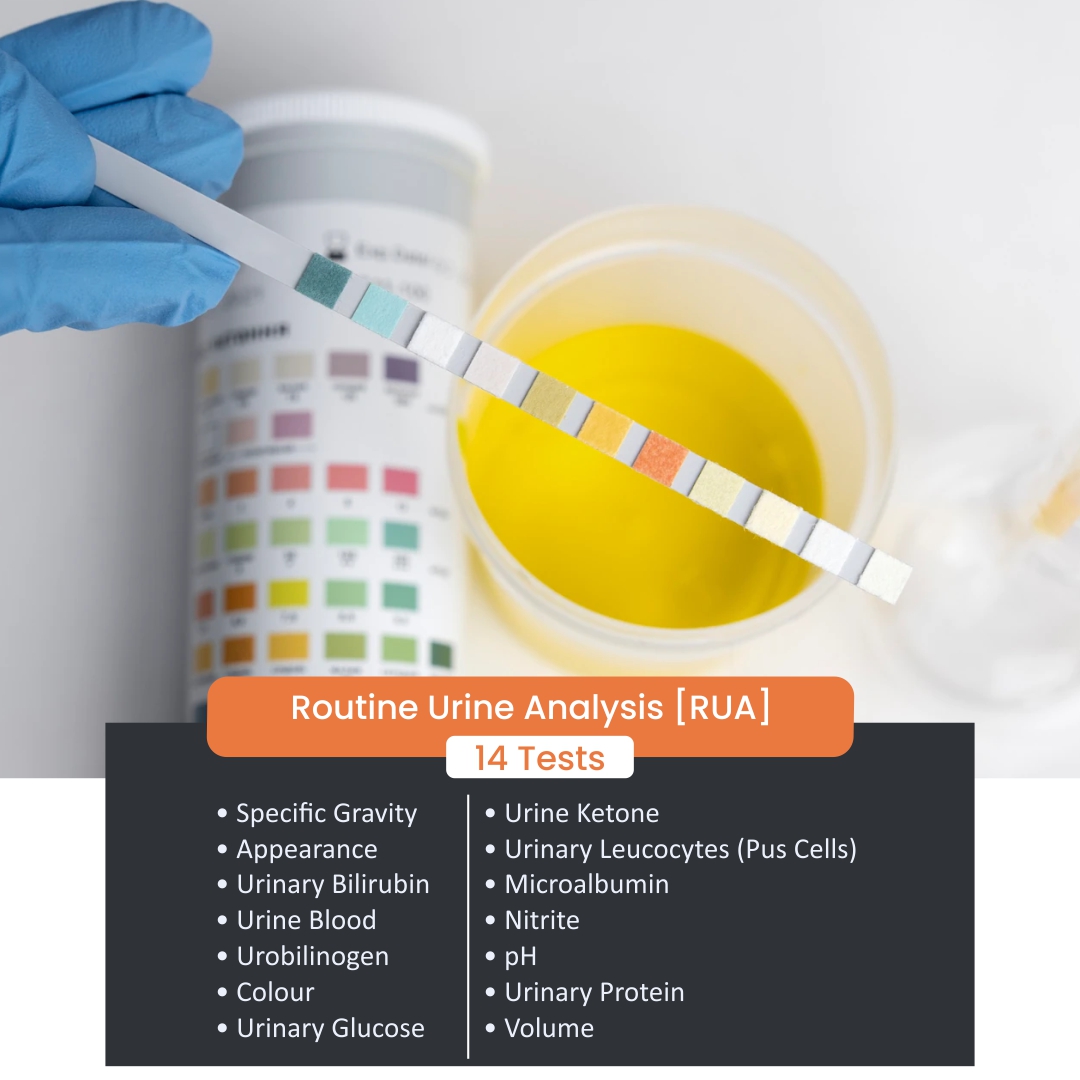
Urine R/E Test (Routine Urinalysis) Profile
Routine Urine Analysis (Urine R/E Test) checks 14 urine parameters used to review urine appearance, specific gravity, pH, glucose, protein, ketones, blood, bilirubin, nitrite, leucocytes, bile pigment, and bile salt. Doctors commonly use this test to check signs of urinary tract infection, kidney stress, diabetes-related urine changes, and other routine urine abnormalities.
Also known as: Routine Urine Test, Urine R/E, Routine Urine Examination, RUA, Urine Test Profile, Routine Urine Panel, Urinalysis, Urinogram
Secure WhatsApp Booking • Pay Directly During Sample Collection
Routine Urine Analysis: Quick Facts
| Profile Name | Routine Urine Analysis (Urinalysis) |
| Price | ₹119 |
| Parameters | 14 physical and chemical urine parameters |
| Sample Type | Urine (Clean-catch midstream sample preferred) |
| Fasting | Not required |
| Testing Lab | Thyrocare |
| Reporting Time | 12 to 18 hours following sample collection |
| Service Type | Home sample collection; free for total order value above ₹300, otherwise chargeable |
Parameters in Routine Urine Test Panel
This 14-parameter panel evaluates urine appearance, concentration, pH, glucose, protein, ketones, blood, bilirubin, nitrite, leucocytes, bile pigment, and bile salt to identify routine urine abnormalities.
Routine Urinalysis (14 Parameters)
- Appearance (Clarity)
- Colour
- Specific Gravity
- pH Level
- Urinary Glucose
- Urine Ketones
- Urinary Protein
- Urinary Bilirubin
- Urine Blood (Hematuria indicator)
- Urobilinogen
- Nitrite
- Urinary Leucocytes (Pus Cells)
- Bile Pigment
- Bile Salt
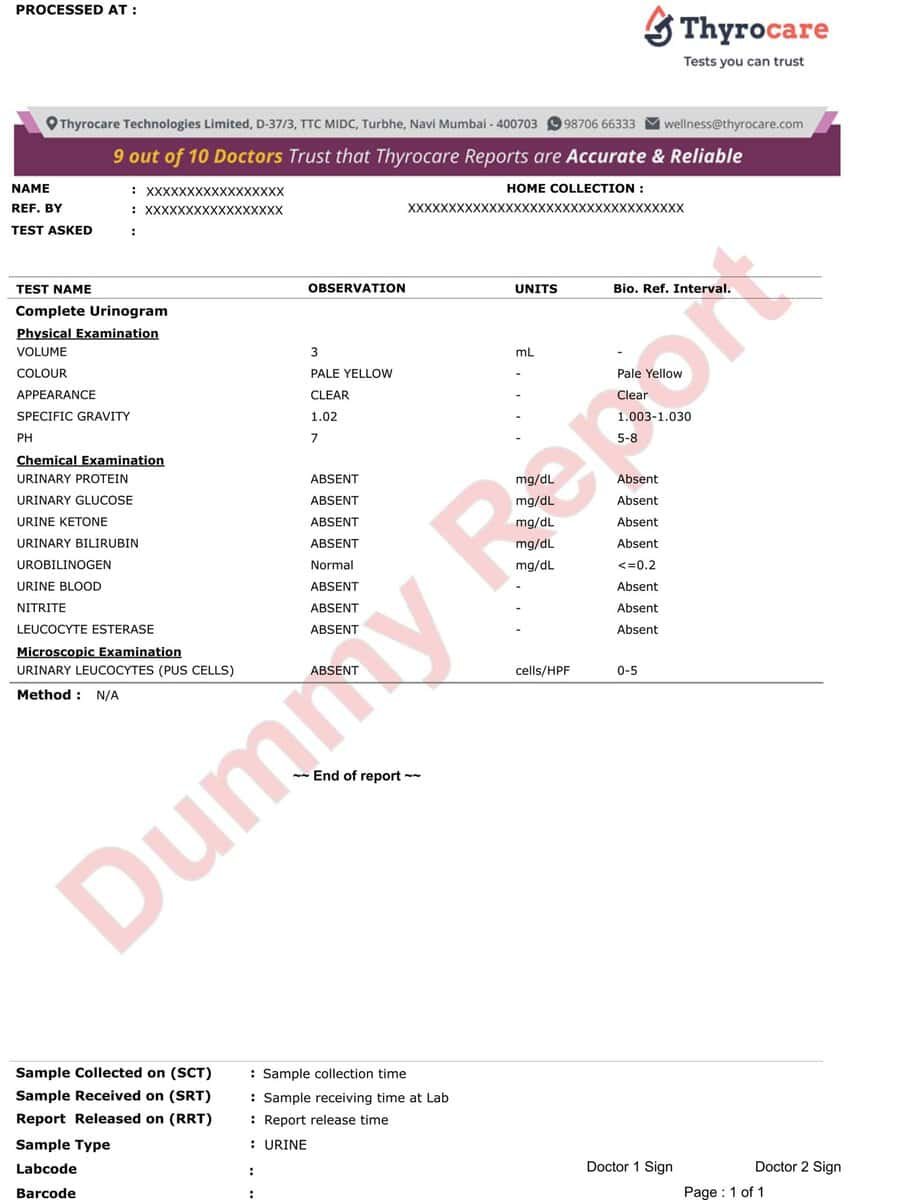
Routine Urine Test Sample Report
The sample report image below helps you understand how Thyrocare presents urine test observations with testing categories (physical, chemical, and microscopic), units, biological reference intervals, and report format.
Clinical Significance of Routine Urine Test
A routine urine test (Urine R/E) is a baseline screening tool used to check urine-related abnormalities such as infection indicators, protein leakage, glucose, ketones, blood, bilirubin, and urine concentration changes.
| Marker Found in Urine | Potential Clinical Indication |
|---|---|
| Protein | Healthy kidneys retain protein. The presence of protein (proteinuria) is often an early sign of kidney stress, damage, or early-stage renal disease. |
| Glucose & Ketones | Glucose in urine is commonly seen when blood sugar crosses the kidney’s reabsorption threshold. Glucose and ketones together are important screening indicators for diabetes-related urine changes. |
| Nitrites & Leucocytes (Pus Cells) | Strong indicators of a Urinary Tract Infection (UTI). Certain bacteria turn natural urinary nitrates into nitrites, while leucocytes appear when your body fights the infection. |
| Blood & Bilirubin | Blood can indicate kidney stones, infections, or bladder issues. Bilirubin in the urine points toward potential liver dysfunction or bile duct blockages. |
Clinical Note: Abnormal flags on a urine examination report are indicators for clinical review, not absolute diagnoses. Factors like severe dehydration, vigorous exercise, or a woman’s menstrual cycle can temporarily alter results. Always share the report with a qualified clinician for proper interpretation.
Test Preparation Guidelines
- Fasting is Not Required: You do not need to fast for a standalone urine test. However, if this is bundled with a fasting blood test (like a Lipid Profile), adhere to the fasting rules of the blood test.
- Hydration: Maintain normal water intake. Avoid drinking unusually large amounts of water right before collection, as this can dilute the urine and affect the specific gravity parameter.
- Collection Method: A “clean-catch midstream” sample is highly recommended. Begin urinating into the toilet, catch the middle portion in the sterile container provided, and finish in the toilet. This prevents skin bacteria from contaminating the sample.
- Medications & Supplements: Inform your clinician if you take Vitamin B complexes, specific antibiotics, or beetroot extracts, as these can change urine color and affect chemical interpretation.
Scheduling Your Home Collection
- Initiate Booking: Send your area PIN code via WhatsApp to +91 70701 77147 to confirm home collection feasibility for your location.
- Register Details: Provide the beneficiary’s full name, age, gender, exact residential address, email ID, and a preferred time slot.
- Sample Handover: A Thyrocare technician will arrive to collect your securely sealed sterile urine container.
- Payment: Pay securely during sample collection using UPI, card, net banking, or another online mode.
- Digital Delivery: Your detailed urine test report will be emailed and sent via WhatsApp within 12 to 18 hours post-collection.
FAQs on Routine Urine Analysis
Is Urine R/E the same as Urine R/M?
Is it different from a urine culture test?
Does the Urine R/E test confirm a disease like a UTI?
Can I book home sample pickup for just a urine test?
How are abnormal urine report values highlighted?
Clinical Reading & Resources: MedlinePlus: Urinalysis • Cleveland Clinic: Urinalysis Overview
Content Authored by: Hema Mehta Sahoo
Medically Reviewed & Verified by: Dr. M A Khan, MBBS, MD Pathology
Last Updated: May 25, 2026