Educational guide • Food sensitivity and digestion
Food Intolerance Tests in India: Meaning, Significance, Preparation, and Cost
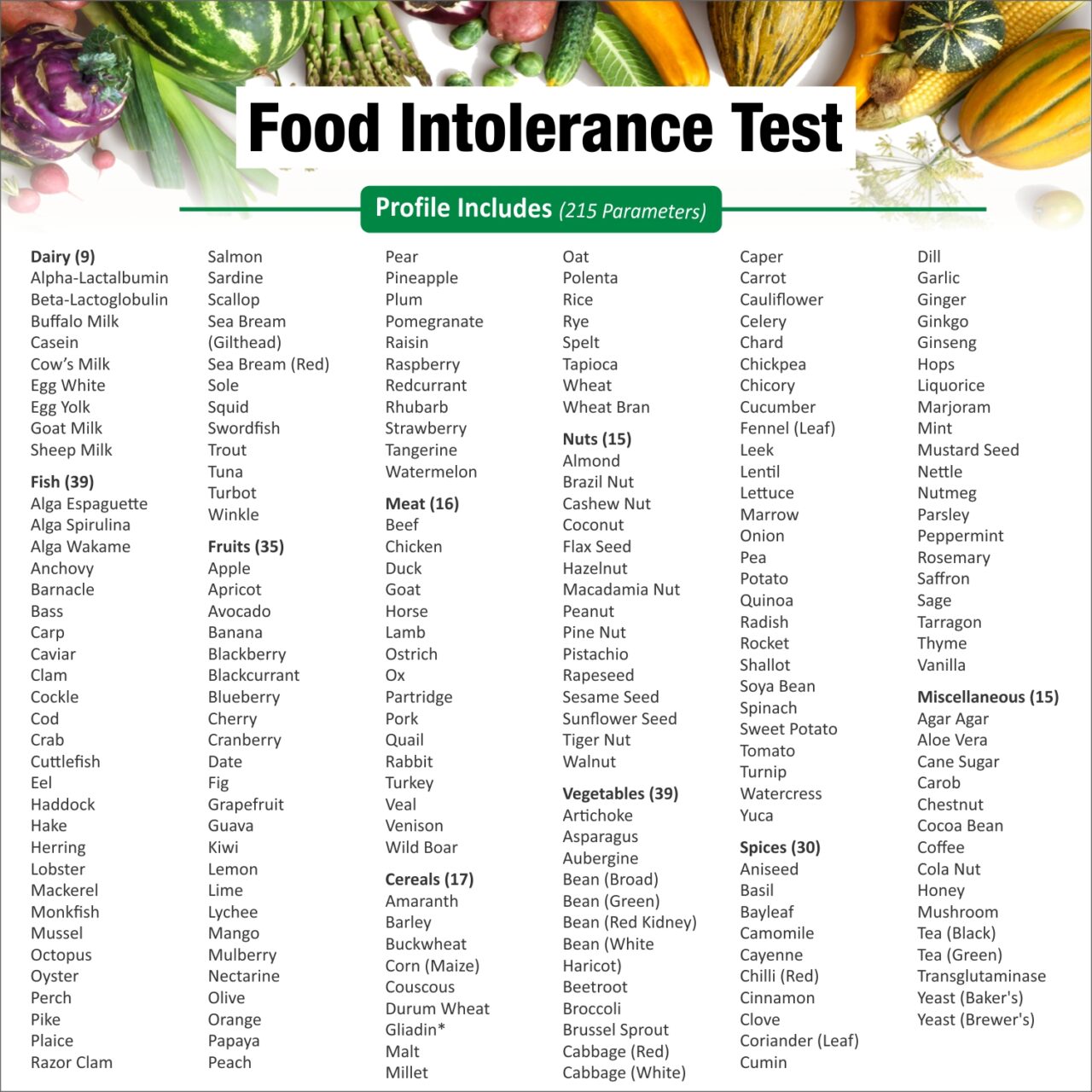
Food intolerance testing is often explored by people dealing with recurring digestive discomfort, food-related symptoms, or diet planning needs. Most “food intolerance panels” marketed in India are IgG-based blood tests that measure immune reactivity to selected foods. These reports can be useful as an additional input, but results should be interpreted with medical history and professional guidance.

Author: Hema Mehta Sahoo
Hema Mehta Sahoo publishes patient-friendly explainers on lab tests, preparation, and report-reading basics. Content is written to support informed conversations with clinicians; it avoids diagnosis, prescriptions, and fear-based claims.
Medical review: Dr M. A. Khan, MD, Pathology
This article is reviewed for medical safety, clarity, and responsible interpretation guidance. .
What is a food intolerance test profile?
A food intolerance profile is commonly an IgG-based blood panel that measures immune reactivity to selected food items. These panels are sometimes used to explore whether certain foods may be associated with delayed, non-immediate symptoms. Results are best used as a starting point for discussion with a clinician or dietitian, not as a standalone diagnosis.
Commonly reported symptoms
Symptoms are non-specific and can overlap with many conditions. A few commonly reported concerns include:
- Bloating and gas
- Abdominal discomfort
- Diarrhea or loose stools
- Headache or migraine
- Nausea or vomiting
- Upset stomach or heartburn
Food intolerance vs food allergy (not the same)
| Feature | Food Intolerance (often explored with IgG panels) | Food Allergy (IgE-based) |
|---|---|---|
| Timing | May be delayed; variable | Often rapid onset |
| Typical symptoms | Digestive discomfort; non-specific symptoms | Hives, swelling, wheezing, anaphylaxis risk |
| Best next step | Discuss diet history and results with a professional | Medical evaluation; emergency care for severe reactions |
Important note about IgG food panels
IgG-based food intolerance testing is a debated topic in clinical practice. Some medical organizations consider IgG responses to reflect exposure rather than intolerance. Because interpretations vary, avoid eliminating multiple foods based solely on the report, especially in children, pregnancy, older adults, or people with chronic illness.
If you suspect a true allergy (for example, wheezing, facial swelling, fainting, rapidly spreading hives), seek urgent medical care. For persistent digestive symptoms, consider a medical evaluation to rule out conditions such as lactose intolerance, celiac disease, infections, or other gastrointestinal causes.
Sample type
A food intolerance panel generally requires a few milliliters of blood. The laboratory typically separates serum before analysis.
Preparation
No fasting is generally required unless your clinician advises otherwise.
Risk level
This is a routine blood test. Minor needle-prick discomfort, bruising, or mild swelling/itching at the puncture site can occur.
Cost and report timeline in India
Pricing varies by laboratory, city, and panel size. In India, many panels fall in the approximate range of ₹7,500 to ₹12,000 depending on the provider and scope.
Report timelines vary; many labs provide reports in about 3–4 working days after sample collection.
Availability
Availability differs by city. Some larger diagnostic providers and hospital labs may offer these panels, including home collection options where applicable.
How to interpret a food intolerance panel report
Many reports use color bands (for example: green/yellow/red) to indicate relative immune reactivity categories. These categories do not confirm a diagnosis and should not be used for self-treatment. If dietary modification is planned, do it with professional guidance to avoid nutritional gaps and unnecessary restriction.
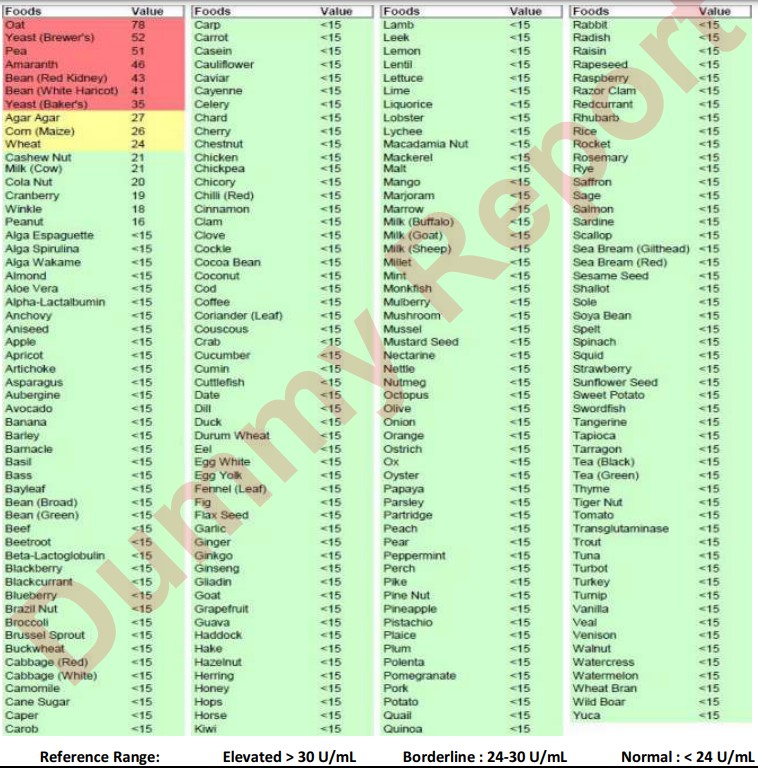
Note: The image is for format reference only. Testing methods, thresholds, and layouts can differ by lab.
FAQs
Is food intolerance the same as lactose intolerance?
Can food intolerance tests diagnose IBS?
Are IgG food intolerance tests scientifically accepted?
Should children take food intolerance tests?
Can I stop eating foods immediately after the test?
Is home sample collection available in India?
Authoritative health information sources
- Cleveland Clinic: Food Intolerance
- MedlinePlus: Food Allergy Testing
- Medical News Today: Food Intolerance
These sources are provided for general education. Testing choices and interpretation should be made with a qualified healthcare professional.