Editorial Note
This article is intended for general educational use. It does not replace in-person medical evaluation or individualized medical advice.
Medical review: The reviewer checked the content for clinical accuracy and balanced wording; this review does not constitute medical advice or an endorsement of any specific treatment for any reader.
Written by
Prema Jha
- Writes educational healthcare content for clinics and health platforms across India, the UK, and the US.
- Has contributed writing to outlets associated with professional surgical communities (including ASPS and BAPRAS).
- Holds dual master’s degrees in Media Management and Human Resource Management (NIILM School of Business, New Delhi).
Medically reviewed by
Dr. Kevin Sadati
- Clinical experience in facial cosmetic and reconstructive procedures (20+ years).
- Professional membership: American Academy of Facial Plastic & Reconstructive Surgery (AAFPRS).
- Review role in this article: accuracy check, terminology review, and clinical balance.
The key differences between a preservation lift and a mini facelift are the right time to consider, the type of skin laxity to adapt, as well as the degree of sagging skin, but still, the decision requires careful assessment because age is just a number, and every patient is unique!
Facelift Techniques in 2026: Evolving Approaches to Facial Rejuvenation
People considering facelift procedures often compare multiple techniques to understand differences in approach, recovery, and suitability. Choosing the right procedure can be confusing. Choosing an appropriate facelift technique depends on individual anatomy, aging patterns, and clinical assessment. Or you may have doubts about the results, including concerns related to aesthetic outcome and preservation of natural facial expression. A prospective patient may have many questions before planning the procedure, and secondly, an educational decision is essential to choose the right facial plastic surgeon near you.
The Key Insights of 2026 Trends in Facial Rejuvenation
- Preservation deep-plane facelift is one of the more frequently discussed facial rejuvenation approaches in 2026, often evaluated for its emphasis on structural support, recovery profile, and incision placement. The technique is commonly discussed in the context of maintaining natural facial proportions, with incisions designed to be discreet.
- If a patient has mild lower face skin laxity and jowl, a less extensive surgical option is a mini facelift, which aims to tighten deep lower face tissues through shorter incisions.
- Despite the higher cost of facial plastic surgery in Newport Beach, the cutting-edge technology, hassle-free surgical journey, top-notch facilities at reputable clinics, and the best availability of the renowned facial plastic surgeon attract patients from around the world.
- The 2026 trends are focused on approaches focused on minimizing visible surgical changes while maintaining natural facial anatomy, with outcomes intended to align with your pre-operative facial characteristics into the face you remembered from your youth.
What Is a Preservation Facelift?
The preservation lift is a deep-plane facelift approach that is focused on with an emphasis on natural facial support while preserving the face’s natural anatomical structure. It involves lifting the SMAS by releasing the retaining ligament of the face and neck, via small incisions that can be easily camouflaged, e.g., around the ears and hairline. The preservation facelift has been discussed in peer-reviewed clinical literature with a focus on anatomical preservation and surgical technique.
Thus, a preservation lift has characteristics that made the procedure in the trend, regardless of choices of preferences, and the set goals without compromising the natural anatomical structure, and the results a patient experiences are designed to avoid excessive skin tension, because this approach gently supports the facial features from their root, which is at play, making you look older. And compared to mini facelifts, a preservation deep plane facelift is chosen to reverse advanced aging before it progresses, while a mini facelift is performed to correct mild to moderate signs of aging, and when a patient is not ready for a full facial rejuvenation.
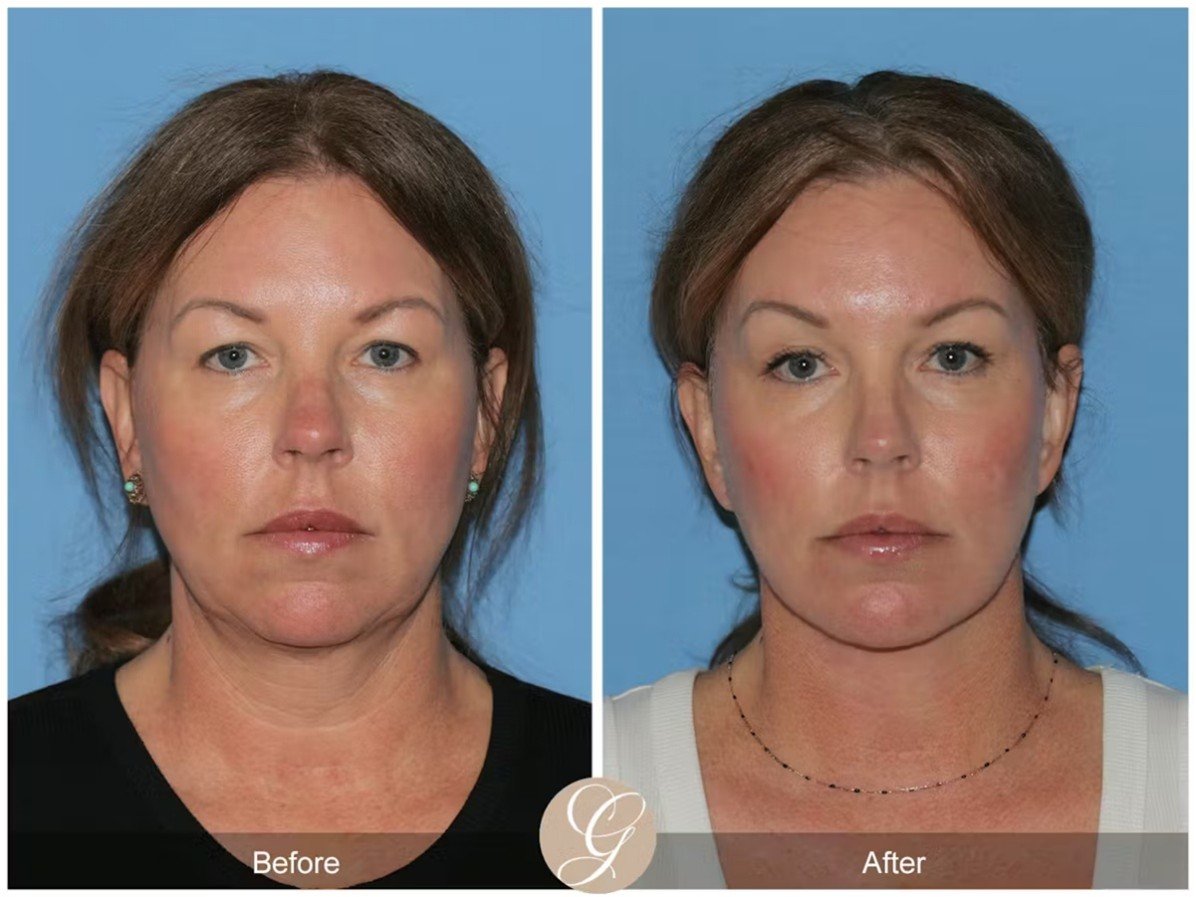
What Is a Mini Facelift?
A mini facelift is the right fit for those in their 30s to early 40s who are experiencing mild sagging and jowling. A mini facelift is performed for patients with signs of primary aging that can still be corrected to help control the severe progression of aging. Of course, it is a minimally invasive technique, and those who receive the treatment have good skin laxity with moderate sagging, but not droopy facial skin.
How Is Dr. Sadati’s Mini Deep Plane Facelift Different in Newport Beach & Orange County?
Dr. Sadati’s mini deep plane facelift is the right choice for those who want facial rejuvenation to address aging signs around the jawline and neck, but are not ready for a full facelift. One distinguishing characteristic of a mini deep plane facelift is its cutting-edge method, which lifts deeper structures vertically and avoids over-stretching or over-pulling the skin, intending to maintain natural facial contours. Moreover, the results are long-lasting because it addresses deeper structures/ below the SMAS through smaller incisions.
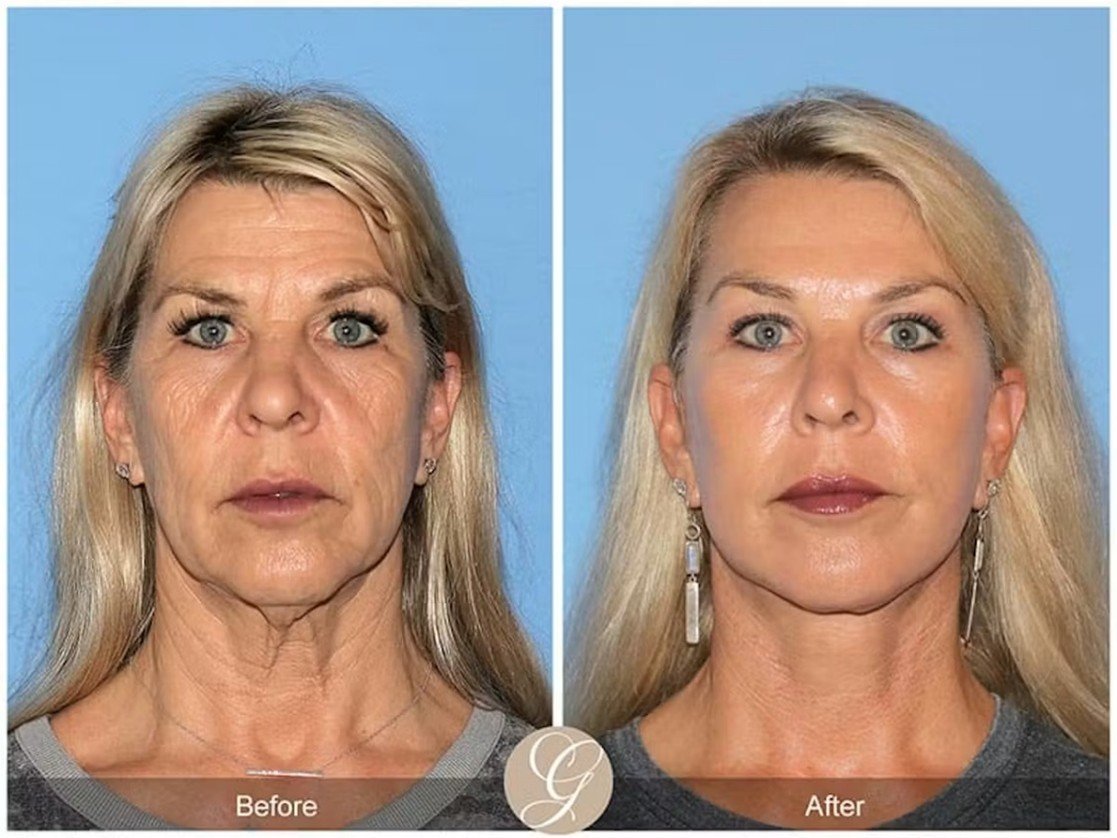
Key Points of Mini Deep Plane Facelift
- The jawline is redefined through shorter incisions, which are perfectly imperceptible because of its location, that are usually made along the hairline above each ear or in the natural creases surrounding the ear.
- Deep facial tissues are tightened to address early signs of aging before they become more pronounced, and durable structural support.
- A mini deep plane focuses on natural lift, vertical repositioning, and the most durable, natural-looking results.
- The procedure is performed under local anaesthesia with twilight sedation, without the need for general anaesthesia, which helps achieve faster downtime, reduced risks and potential complications associated with general anaesthesia, and helps minimize the procedure cost.
Four Differences: Preservation vs Mini Deep Plane Facelift
- The Types of Incisions & The Treatment Areas: A preservation deep-plane facelift involves small, discreet incisions around the ears and hairline, so the traces of surgery/scars can be perfectly camouflaged. The targeted treatment areas are midface, lower face, and neck, i.e., cheeks, jawline, and turkey neck, addressing the advanced signs of aging, while protecting the face’s natural shape and movement. Moreover, the minimal skin dissection used in preservation lift helps maintain blood flow, reduce the rate of complications, and improve the healing response. Targeting deeper tissues in preservation lifts significantly promotes structural rejuvenation from its origin to achieve the most long-lasting results.
A mini deep plane facelift involves smaller incisions discreetly placed around the hairline and the ear to address lower face and neck laxity, correcting the lower face and neck, and is an ideal choice for those experiencing primary signs of aging; it does not provide full midface correction.
The targeted treatment areas are the lower face, jawline, and cheeks only, and do not affect wrinkles on the forehead or lines around the eyes. It gently lifts underlying tissues (the SMAS layer) in the lower face, repositioning fat compartments for a naturally youthful appearance. - Extent of Skin Undermining vs Vertical Lift: Preservation deep-plane facelift minimizes skin undermining, maintains the most natural results by lifting the deep tissue layer in a vertical direction, and preserves the skin’s blood supply, leading to quicker recovery and fewer complications.
A mini deep plane provides better results than traditional facelifts, with a more natural-looking appearance. - Surgery Duration: The Efficiency Factor: A preservation deep plane facelift may take about 4-5 hours, which is longer than a traditional facelift (which may last 2-3 hours or more). In a Preservation facelift, the deep layer is lifted, which requires precision and expertise, whereas the traditional facelift pulls on the skin, which is technically easier and faster.
- Long-term Results Duration- 10+ Years vs 5-7 Years: Preservation deep plane facelifts are generally considered the gold standard for delivering the longest-lasting results and dramatic improvements, despite less skin undermining. The results may last 10-15 years or longer, depending on your skin quality, genetics, bone structure, and lifestyle.
A mini deep plane facelift may last about 5-7 years. However, outcomes may persist for several years, depending on patient-specific factors, with subtle, elegant definition and smoother contours.
The Gallery of Cosmetic Surgery in Newport Beach maintains transparent pricing for facelifts. If you’re interested in learning more, consult with a board-certified facial plastic surgeon for an individualized assessment. Here is a verified help number (949) 979-7392.
Updated on: 11 February 2926